A quality sofa is the anchor of a living room, and when you add sleeper functionality, you’ve got genuine versatility. American Leather sleeper sofas have become a go-to choice for homeowners juggling guests, small spaces, and the desire for comfort without compromise. Unlike bargain imports or trend-driven pieces, these sofas are engineered for longevity, built with solid wood frames and high-density foam cores that actually feel as good in year five as they do on day one. Whether you’re furnishing a guest room, studio apartment, or family living space, understanding what sets an American leather sleeper sofa apart, and how to choose one that fits your lifestyle, will help you make an investment that pays dividends for years.
Table of Contents
ToggleKey Takeaways
- American leather sleeper sofas are engineered with kiln-dried hardwood frames and high-density foam to deliver 10+ years of reliable service, far outlasting budget alternatives that fail within 4–5 years.
- Quality sleeper mechanisms use heavy-gauge steel linkage tested for 25,000+ cycles, ensuring smooth operation and durability for frequent use without frustration or malfunction.
- Before purchasing an American leather sleeper sofa, test the conversion mechanism in person, measure sleeping dimensions (54–80 inches), and verify frame and foam quality to avoid false economy purchases.
- Regular maintenance—conditioning leather every 6–12 months, vacuuming fabric weekly, and lubricating mechanisms annually—keeps your sleeper sofa looking and functioning like new for decades.
- While an American leather sleeper sofa typically costs $2,000–$5,000, the investment pays dividends through resale value, comfort for guests, and eliminated replacement costs compared to cheaper sofas that require replacement every few years.
- Prioritize kiln-dried hardwood frames and reliable sleeper mechanisms over upholstery when budgeting, since a quality frame can be reupholstered but a compromised structure cannot be easily repaired.
What Makes American Leather Sleeper Sofas Stand Out
Key Features & Construction Quality
American Leather sleeper sofas stand apart from mass-market alternatives because they’re built to last. The frame is typically kiln-dried hardwood, usually maple or ash, which resists warping and movement over time. That matters: a cheap sofa’s frame will start creaking within a few years because the wood wasn’t properly seasoned or joined.
The seating surface combines high-density polyurethane foam (usually 1.8–2.0 lb. density) wrapped in natural fibers like cotton or wool batting. This combination absorbs body weight without bottoming out, so you’re not sitting on springs after six months. Many budget sofas use low-density foam (1.0–1.2 lb.) that compresses fast, especially in seating areas.
The sleeper mechanism is where durability really shows. American Leather uses heavy-gauge steel linkage and bar systems engineered to handle repeated opening and closing. A guest bed mechanism that’s flimsy or requires three people to operate gets used less, which defeats the purpose. Quality manufacturers test these mechanisms for 25,000+ cycles (that’s years of reasonable use) before they reach customers.
Upholstery options vary widely. Full-grain leather develops a patina and actually improves with age, scratches and wear marks add character. Microfiber is more budget-friendly and easier to clean if you have kids or pets. Fabric blends offer middle ground. The stitching should be tight and even, and seams shouldn’t pull or gap.
Fabric or leather that’s been treated with performance finishes (like Crypton or Sunbrella) resists staining and fading, which is practical if your sleeper sofa lives in a sunlit room or gets heavy use.
Style & Design Options for Every Home
An American leather sleeper sofa doesn’t have to look like a hand-me-down guest bed. Contemporary designs with tight backs and slim arms fit seamlessly into modern living rooms. Rolled arms and nailhead trim appeal to traditional or transitional spaces. Some manufacturers offer track arms or slope-back designs that feel casual and comfortable.
Color is personal, but neutrals (gray, charcoal, cream, navy) stay timeless and pair with existing décor. Deeper tones like cognac leather or forest green add presence without being trendy. Patterned fabrics are riskier, they date faster, so reserve them for pieces you’re willing to refresh in five years.
Size matters, especially for a piece doing double duty. A loveseat sleeper works for a studio or office: a full-size sectional sleeper can anchor a family room. Measure your actual space, account for the pull-out length when extended, and verify doorway and stairwell widths. A sleeper sofa that doesn’t fit through the entrance is expensive wall art.
Storage is underrated. Some American leather sleeper sofas include built-in storage under the seat cushions, ideal for bedding, throws, or seasonal items. Others have drawers integrated into the frame. If your space is tight, this feature prevents guest bedding from eating up closet real estate.
An american leather sleeper sofa outlet or direct-sale option sometimes offers models with limited fabric selections or discontinued colors at a discount. This doesn’t mean lower quality, it’s smart inventory management by the maker. If you’re flexible on upholstery, checking outlet options can save 20–40%.
Buying Tips: How to Choose the Right Sleeper Sofa for Your Space
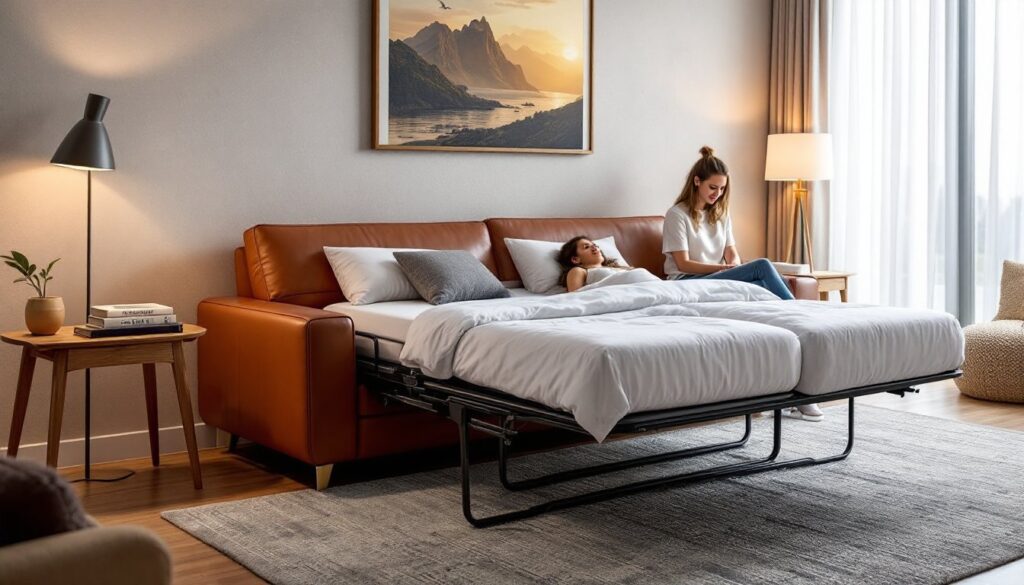
Start by measuring your room and the sleeping area you need. A sleeper sofa should extend into a usable sleeping surface, typically 54 to 60 inches wide and 72 to 80 inches long when fully opened. If your guest room is tiny, a loveseat sleeper (32–48 inches) might work for occasional overnight visitors. For regular overnight guests, budget the full sleeping dimensions: a cramped bed defeats the purpose.
Consider how often the sleeper function will be used. If it’s a once-a-year holiday visit, a reliable mechanism matters but a basic model is fine. If you’re hosting multi-day guests or using it as a home office fold-out, you want premium construction and smooth operation that won’t frustrate you repeatedly.
Test the conversion in person if possible. Does it open smoothly, or does it require a hard yank? Are the steps intuitive, or do you need an instruction manual? A good sleeper should open with one smooth motion once you understand the mechanism. Poor designs require lifting, pushing from multiple angles, or repositioning legs.
Ask about warranty and support. American Leather typically offers a 5 to 10-year structural warranty covering the frame and mechanism. Fabric warranty is shorter (often 1–3 years) and usually covers manufacturing defects, not wear or staining. Read the fine print: some warranties require professional maintenance or void coverage if the sofa is used differently than recommended.
Verify construction details before purchasing. Confirm kiln-dried hardwood frame, high-density foam, and the type of sleeper mechanism (metal bar, link system, or modern hydraulic). Budget options sometimes cut corners on frame quality or use inferior foam that sags. An american leather sleeper sofa outlet price is attractive, but cheap construction will disappoint. Budget-conscious buyers should consider certified refurbished models from authorized dealers, which carry the same warranty as new pieces.
Maintenance & Care for Long-Lasting Durability
Leather requires regular conditioning to prevent cracking. Use a leather conditioner every 6–12 months: it restores oils and keeps the material supple. Wipe spills immediately with a damp cloth to prevent staining. For stubborn marks, a leather cleaner designed for your leather type (aniline, semi-aniline, or protected) works better than generic soaps.
Fabric upholstery needs vacuuming weekly or bi-weekly to remove dust and crumbs. Use a upholstery brush attachment to avoid pilling. Spot-clean stains with an appropriate fabric cleaner, test on a hidden area first. High-performance fabrics with stain treatment resist marks but aren’t bulletproof: prompt attention prevents permanent damage.
The sleeper mechanism deserves basic care too. Ensure moving parts open freely and there’s no debris catching hinges or bars. Don’t force the mechanism if it feels stuck: gently work it back and forth to identify what’s binding. Lubricate moving joints annually with a dry silicone spray (not oil, which attracts dust).
Rotate cushions monthly if the design allows. This evens wear and extends the life of padding. If the sofa will spend months without being used as a bed, still open it occasionally, stagnant mechanisms seize up. Sunlight fades both leather and fabric, so use curtains or blinds in bright rooms, or position the sofa away from direct rays.
For deep cleaning, hire a professional upholstery cleaner every 2–3 years if the sofa gets heavy use. They have industrial equipment and knowledge of fabric-specific solvents. DIY steam cleaning can damage some fabrics or void warranties, so check manufacturer guidelines first. Simple attention like this keeps a quality sleeper sofa looking and functioning like new.
Budget & Value: Is an American Leather Sleeper Sofa Worth the Investment
A solid American leather sleeper sofa ranges from $2,000 to $5,000 or more, depending on size, materials, and customization. That’s a significant purchase, but context matters. The average budget sofa lasts 4–5 years before the frame creaks, foam sags, and the sleeper mechanism feels clunky. A quality sleeper sofa will deliver 10+ years of reliable service if maintained.
Over a decade, that’s roughly $200–500 per year, compared to replacing a cheaper sofa twice. If you use it as a guest bed regularly, the durability payoff is obvious. Comfort also has value: spending two nights on a saggy sofa bed is miserable and sends guests home irritated. A good night’s sleep on a proper mattress-like surface is worth the cost.
Resale value is another angle. High-quality American-made furniture holds resale value better than disposable imports. If you ever sell your home or downsize, a well-maintained leather sofa is a selling point. A beat-up budget sofa is clutter.
Compare total cost, not just sticker price. An american leather sleeper sofa outlet price might tempt with a $1,500 tag, but if the mechanism fails after two years and repairs cost $800, that’s a false economy. Authorized dealers and outlets run by the manufacturer are safer: third-party liquidators sometimes sell older stock or refurbished pieces without full warranty coverage.
If budget is tight, prioritize frame and mechanism quality over upholstery. You can reupholster a solid sofa in five years if the fabric wears. You can’t easily rebuild a bad frame or replace a shot mechanism. Save for a quality piece, or consider a high-quality new sofa without a sleeper function if sleeping guests are rare. Hybridizing, a durable sofa plus a separate rollaway or air mattress, might serve you better than a compromised sleeper.
Conclusion
An American leather sleeper sofa is a long-term investment that rewards thoughtful purchasing. Build quality, honest sizing, and realistic maintenance habits separate pieces that last from those that disappoint. Whether you’re outfitting a studio, family home, or guest suite, prioritizing hardwood frames, high-density foam, and reliable mechanisms ensures your sofa earns its place, and its price tag, for a decade or more. The right choice combines style with substance, turning a functional necessity into a piece you actually enjoy using.