Baking soda is one of those rare products that actually delivers on its promises, and won’t empty your wallet. For homeowners tired of expensive carpet cleaners and chemical fumes, this kitchen staple offers a straightforward, affordable alternative that works on everything from everyday dust to stubborn odors. Whether you’re refreshing a living room before guests arrive or deep-cleaning after months of foot traffic, baking soda carpet cleaner is a practical solution that most people already have in their pantry. This guide walks you through the exact technique professionals know but rarely advertise.
Table of Contents
ToggleKey Takeaways
- Baking soda carpet cleaner works by neutralizing acidic odors at the molecular level rather than masking them, making it a safe, non-toxic alternative to expensive commercial cleaners.
- For best results, vacuum thoroughly first, sprinkle baking soda evenly across the carpet, let it sit for at least 15 minutes (overnight for strong odors), brush gently into the fibers, then vacuum completely.
- Pet urine and tough odors require increased baking soda coverage and extended sitting time of 12–24 hours; repeat treatments may be necessary for stubborn smells.
- Apply baking soda carpet cleaner every 4–6 weeks in high-traffic areas to prevent odor buildup and maintain freshness between deep cleans.
- Never mix baking soda with vinegar or acidic solutions—use it alone or add 10–15 drops of essential oil per cup for optional scent without reducing effectiveness.
- For set-in color stains that baking soda cannot lift, schedule professional steam cleaning once yearly, as this kitchen staple excels at odor removal but not deep stain extraction.
Why Baking Soda Works as a Carpet Cleaner
Baking soda (sodium bicarbonate) is a weak base that neutralizes acidic odors at the molecular level rather than masking them. Pet accidents, spilled food, and trapped moisture in carpet fibers all leave behind acidic compounds. When baking soda contacts these particles, a chemical reaction occurs that breaks them down, leaving no smell behind, not just covered up.
Unlike commercial carpet powders packed with fragrance and mystery ingredients, baking soda is non-toxic and safe around children and pets. It doesn’t dissolve easily in water, so it stays in the carpet fibers long enough to do its job. The slight abrasiveness also helps loosen embedded dust and dirt without damaging synthetic or natural fibers when used correctly. That’s why it’s recommended in professional cleaning guides and homeowner forums alike.
What You’ll Need to Get Started
Materials:
• Baking soda (standard grocery-store brand works fine)
• Optional: 10–15 drops of essential oil per cup of baking soda for scent (lavender or lemon are popular)
• Vacuum with good suction
Tools:
• Shaker container or salt shaker (if you want precise distribution)
• Stiff-bristled brush or old toothbrush (for working baking soda into fibers)
• Damp cloth or paper towels
Safety & Prep:
• Wear a dust mask or N95 if you’re sensitive to fine powders
• Open windows or turn on exhaust fans to minimize airborne particles
• Test baking soda on a hidden corner first, especially if your carpet is delicate or vintage
That’s really it. You don’t need expensive equipment, special cleaners, or a trip to the store if you already keep baking soda stocked.
Step-by-Step Guide to Cleaning Your Carpet
Preparing Your Carpet
Start by removing visible debris. Vacuum thoroughly in multiple directions, forward and backward, then left and right, to lift loose dust, pet hair, and crumbs before the baking soda goes down. This step prevents the powder from clumping around trapped particles. If your carpet has visible stains, blot (don’t rub) them with a damp cloth first and let them air-dry completely. Moisture trapped under baking soda can cause mildew, so patience here matters.
Move small furniture off the area you’re treating, or plan to work in sections. Baking soda works on any carpet fiber, wool, nylon, polyester, or natural blends, but test on an inconspicuous spot first if the carpet is older or has special finishes.
Applying and Working in the Baking Soda
For a standard room (roughly 200 square feet), use about one cup of baking soda. If adding essential oil for scent, mix it into the baking soda in a sealed container at least 24 hours before use so the oil distributes evenly and doesn’t wet the powder.
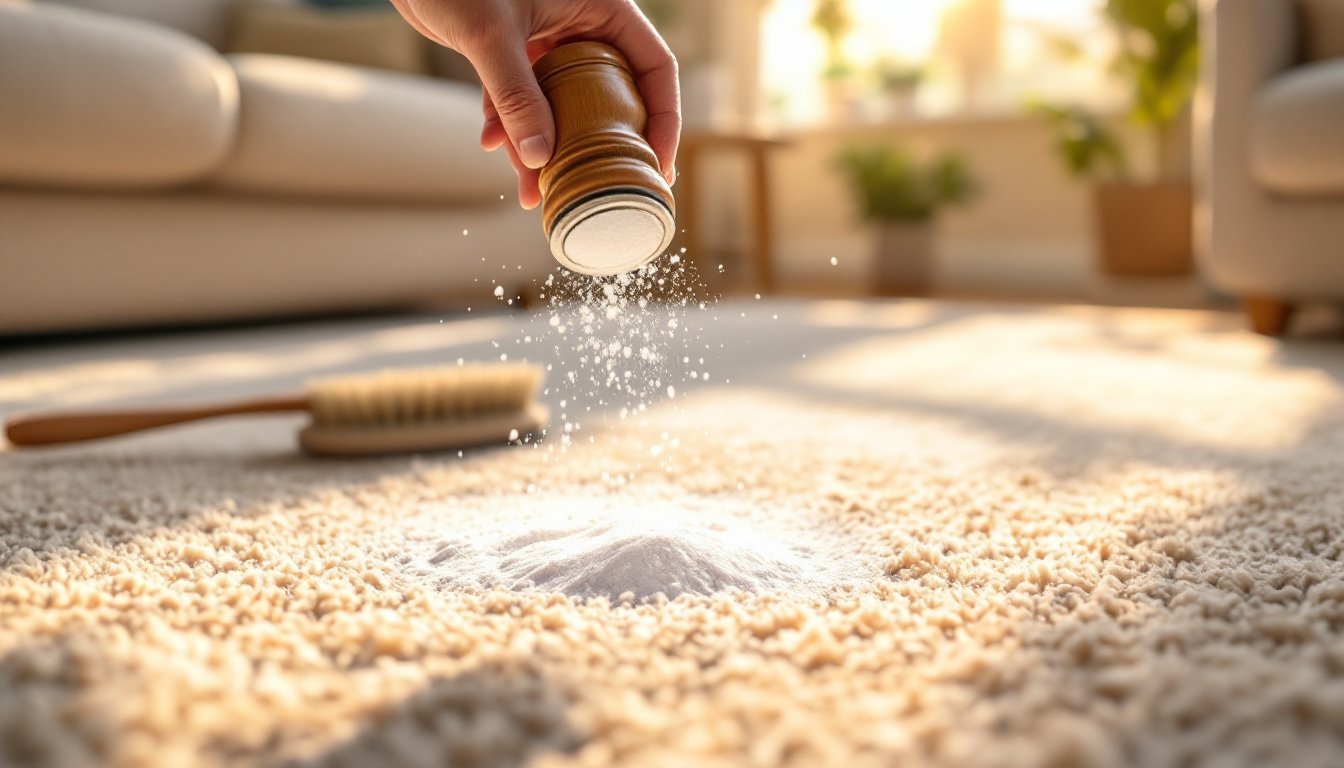
Spread baking soda evenly across the carpet using a shaker or by hand, working in small sections. Avoid piling it too thick: you want a light, visible coating, not a snow blanket. Let it sit for at least 15 minutes (overnight is even better for strong odors). This resting period is when the chemical neutralization happens, so don’t skip it.
After the waiting time, use a stiff-bristled brush to gently work the baking soda into the carpet pile. Brush in the direction the carpet nap runs to avoid matting. This step helps the powder penetrate deeper and dislodges more trapped dirt. Spend a minute or two per section: it’s not aggressive scrubbing, just deliberate, light pressure.
Vacuuming and Final Touches
Vacuum thoroughly once the baking soda has settled and dried. Use slow, overlapping passes to pick up as much powder as possible. Go over high-traffic areas and corners twice, baking soda settles into edges. A good vacuum with strong suction will collect most of it: a second pass 30 minutes later catches any stragglers.
If baking soda dust remains visible on top, a damp cloth pressed lightly against the carpet fibers will pick up the residue. Don’t over-wet: you’re just dampening the surface. Open windows again for 10–15 minutes to clear any airborne dust. Your carpet should feel softer and smell fresher, with odors genuinely neutralized instead of hidden under perfume.
Tackling Tough Stains and Odors
For pet accidents or deep odors, increase baking soda coverage and let it sit overnight (or 24 hours if possible). The longer contact time gives the chemical reaction room to work. If the smell persists after the first application, repeat the process, stubborn odors sometimes need two treatments.
Pet urine is acidic, making it an ideal target for baking soda. If you know the exact location, sprinkle baking soda directly on that spot, let it sit for 12 hours, then vacuum. For widespread odors throughout a room, treat the entire carpet as described in the main steps.
For greasy stains or food residue, blot first with a damp cloth and mild dish soap solution, let dry completely, then apply baking soda. The Ultimate Spring Cleaning Hacks to Reset Your Home Fast describes this sprinkling-and-settling method as a trusted approach for odor removal. Baking soda alone won’t lift set-in color stains (that’s a job for steam cleaning or professional equipment), but it will remove the odor beneath them.
For fresher, ongoing carpet maintenance, Real Simple recommends regular baking soda applications every 4–6 weeks in high-traffic areas. This prevents odor buildup and keeps the carpet smelling clean between deep cleans. Some homeowners make it a monthly ritual on the same weekend they change bed sheets, simple habit-stacking.
Do not mix baking soda with vinegar, lemon juice, or other cleaning solutions. The chemical reaction looks impressive but leaves a residue and defeats the purpose. Stick to baking soda alone or baking soda plus optional essential oil. If your carpet needs more aggressive stain removal, that’s a signal to call in professional equipment or Martha Stewart recommends scheduling a deep clean once yearly with a rented or professional steam cleaner, which handles set-in stains that baking soda cannot.