Brown kitchen cabinets have staged a quiet comeback in home design, and for good reason. Whether you’re renovating your kitchen or building new, brown cabinetry offers warmth, versatility, and a timeless aesthetic that works with nearly every design direction, from farmhouse and rustic to contemporary and minimalist. Unlike trendy white or gray cabinets that can feel cold or dated in a few years, brown kitchen cabinets ground a space with natural appeal and sophistication. This guide walks you through everything you need to know about choosing, designing, and installing brown cabinets that’ll feel right at home in your kitchen.
Table of Contents
ToggleKey Takeaways
- Brown kitchen cabinets offer timeless warmth and versatility that work across design styles while hiding dust and wear better than high-maintenance white finishes.
- Espresso, chocolate, honey, and natural wood brown tones each create distinct aesthetics—choose darker browns for bold contrast with light countertops, or lighter honey finishes for smaller kitchens with limited natural light.
- Light-colored countertops and white subway tile backsplashes create visual contrast and prevent brown cabinet kitchens from feeling heavy or monotone.
- Warm white LED lighting (2700K) and complementary hardware finishes like bronze, brass, or matte black enhance brown cabinetry without overpowering the space.
- Brown cabinets appeal to mainstream homebuyers and hold resale value better than trendy colors, making kitchens with brown cabinetry a smart long-term investment.
- Hardware upgrades like vertical pulls and recessed handles are affordable, high-impact ways to elevate brown cabinet aesthetics and improve functionality.
Why Brown Kitchen Cabinets Remain a Timeless Choice
Brown cabinetry isn’t a passing fad, it’s rooted in the fundamental appeal of natural wood and warm earth tones. Unlike white cabinets that require meticulous upkeep to avoid visible fingerprints and stains, brown finishes are forgiving and hide dust, wear, and minor imperfections gracefully. This practicality matters when you’re cooking dinner and your kids are touching everything.
Psychologically, warm brown tones evoke comfort and stability. They create a sense of coziness while still feeling upscale when paired with quality hardware and finishes. Brown cabinets also pair naturally with a wider range of countertop materials, stone, butcher block, quartz, and tile all complement brown without competing visually.
From a resale perspective, brown cabinetry appeals to mainstream buyers. Real estate data shows that neutral, warm finishes hold value better than trendy colors because they don’t feel dated in five years. Kitchens are one of the highest ROI renovation projects in a home, and choosing brown cabinets positions your kitchen to stay relevant long-term.
Popular Brown Cabinet Styles and Finishes
Not all brown is the same. The tone, finish, and undertone of your brown kitchen cabinets dramatically affect the overall kitchen aesthetic. Understanding the difference between warm and cool browns, matte and glossy finishes, and stained versus painted options helps you pick the right match for your space.
Warm Espresso and Chocolate Tones
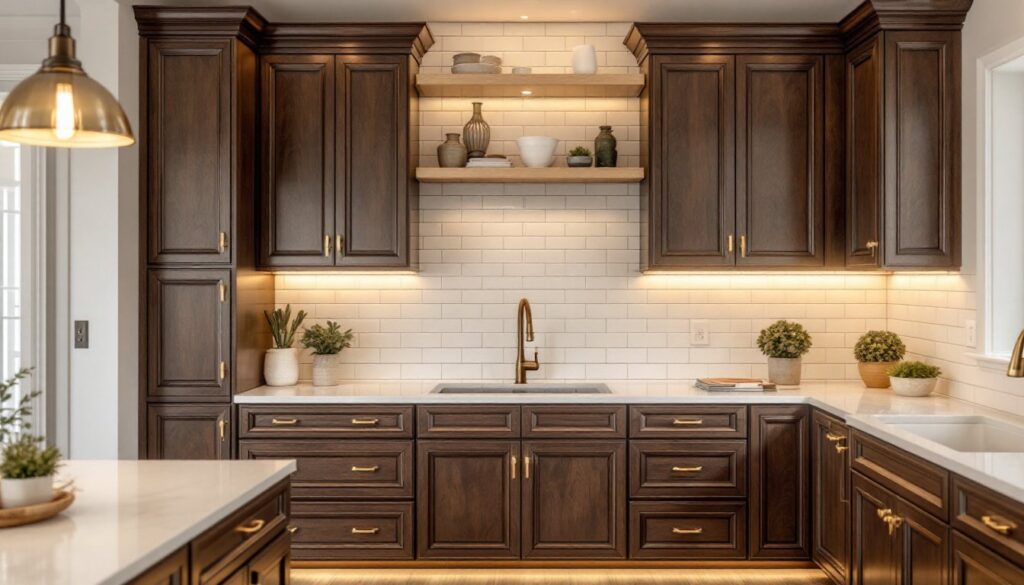
Espresso and dark chocolate browns are rich, sophisticated, and bold. These deeper tones work beautifully in kitchens with generous natural light or under-cabinet LED lighting (which prevents the space from feeling too dark). Espresso cabinets create high contrast with light countertops and backsplashes, making them the focal point of the room.
Dark chocolate browns often have slight red or burgundy undertones, adding warmth and preventing a cold, flat appearance. This finish pairs exceptionally well with stainless steel hardware, concrete or dark granite countertops, and white subway tile backsplashes. The visual contrast keeps the kitchen from feeling heavy or cave-like.
If you’re building or refacing cabinets, espresso stain over oak or maple solid wood creates depth that looks significantly more expensive than flat painted finishes. Expect to invest more for quality stain and finish, this is one area where budget cuts are visible.
Natural Wood and Honey Finishes
Natural wood browns and honey tones are lighter, more flexible, and easier to work with than dark espresso. These finishes celebrate the wood grain itself, so material choice matters, cherry, walnut, and hickory show beautiful natural variation. Honey brown cabinetry feels warm without overwhelming a space, making it ideal for smaller kitchens or rooms with limited natural light.
Honey finishes work across traditional, transitional, and modern farmhouse kitchens. They pair beautifully with light quartz countertops, cream-colored tile backsplashes, and warm metal hardware (copper, brass, or bronze). The warmth of natural brown wood also complements wooden bar stools and open shelving if you’re mixing materials.
One key consideration: solid wood cabinets with natural stains require more maintenance than painted surfaces. You’ll need to use appropriate wood cleaners and conditioners, and the finish will show dust more readily. If low-maintenance is your priority, consider painted cabinets in a warm brown tone instead of stained solid wood.
Designing Your Kitchen Around Brown Cabinets
Your brown cabinets set the tone for the entire kitchen, so surrounding materials and fixtures must work in concert with that choice. This is where most DIYers and homeowners make mistakes, picking cabinets first, then scrambling to find countertops and hardware that fit.
Countertop and Backsplash Pairings
Countertop selection can make or break a brown cabinet kitchen. Light-colored countertops (white quartz, cream granite, or light butcher block) create visual contrast and prevent the kitchen from feeling too monochromatic. If you’re drawn to white cabinetry for contrast, interior design inspiration sites show how high contrast between brown cabinets and white counters feels crisp and contemporary.
For a more cohesive, warm palette, consider honey or medium-brown granite, warm taupe quartz, or natural walnut butcher block. These options feel unified and sophisticated without being boring. Butcher block is increasingly popular over brown cabinets because the warm wood tones echo the cabinet material.
Backsplashes are your second layer of visual interest. White subway tile is the safe choice and works with nearly every brown, it’s clean, affordable, and never looks wrong. For more character, consider warm white metro tile with darker grout, hexagon tile in cream or warm gray, or even a narrow linear tile in soft gold or warm bronze. Avoid busy patterns that compete with the cabinetry itself.
One practical note: dark grout in a subway tile backsplash above brown cabinets can feel heavy. If you love dark grout for its low-maintenance appeal, test samples in your lighting first. Some homeowners find that combination too dark, while others love the contrast.
Lighting and Hardware Choices
Lighting is non-negotiable when working with brown cabinets, especially darker espresso tones. Under-cabinet LED strips ensure your counter workspace is well-lit and make the cabinetry itself look more polished. Overhead pendant lights or a kitchen island light fixture should coordinate in finish, brushed nickel, bronze, or oil-rubbed bronze all play well with brown cabinetry.
Bright, cool-white LED bulbs (5000K color temperature) can wash out warm brown tones and make them look dingy. Instead, opt for warm white bulbs (2700K) that complement the cabinet’s warmth. Kitchen design resources emphasize how lighting temperature dramatically impacts how cabinetry looks at night.
Hardware, cabinet pulls and knobs, deserves careful thought. Bronze, brass, copper, and matte black hardware all coordinate beautifully with brown cabinetry. Stainless steel feels modern and works with darker browns. Avoid mixing too many metal finishes: stick to two complementary tones (e.g., brushed brass on cabinets, matte black on the sink faucet). This creates intentional, designed look rather than random hardware chaos.
Hardware placement affects both aesthetics and ergonomics. Vertical pulls on tall cabinets and recessed handles on drawers reduce visual clutter and improve day-to-day usability. If you’re refacing existing cabinets, new hardware is one of the cheapest, highest-impact upgrades you can make, no tools required beyond a screwdriver and template, and you’ll see results immediately.