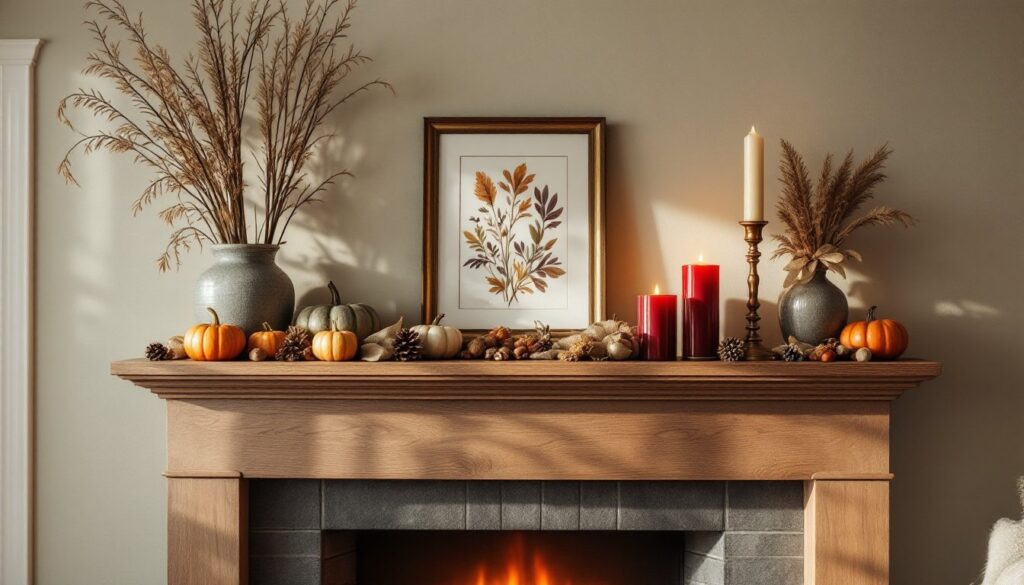
A fireplace mantel is prime real estate in any home, it’s the first thing guests notice when they walk in, and it sets the mood for the entire room. When autumn rolls around, your mantel becomes an opportunity to showcase seasonal style without needing a full renovation. Whether you’re drawn to fall mantel decor ideas centered on rustic charm or elegant fall mantel decor featuring refined touches, the mantel is where you can layer texture, color, and warmth into a display that actually feels intentional rather than randomly assembled. The best part? You don’t need a design degree or a massive budget to pull it off. This guide walks you through the why, the what, and the how of styling a fall mantel that works for your home.
Table of Contents
ToggleKey Takeaways
- A well-styled fall mantel decor creates a focal point that signals intentional seasonal choices and sets the mood for your entire room.
- Successful fall mantel arrangements balance natural elements (branches, gourds, foliage), color accents (burnt orange, burgundy, golden yellow), structural pieces, and lighting to avoid cluttered designs.
- Use the step-by-step styling approach—clear the space, establish anchor points with tall items, layer height and depth, cluster colors, and edit ruthlessly—to create professional-looking displays.
- Match your fall mantel style to your home’s aesthetic: choose traditional (rich colors, abundance, symmetry) for classic interiors or modern (negative space, muted palettes) for contemporary homes.
- Budget-friendly fall mantel decor relies on free natural elements from your yard, thrifted finds, and reusable purchases like battery-operated candles rather than expensive seasonal accessories.
Why Your Mantel Matters: Setting the Tone for Autumn
Your mantel is the focal point of the room, it draws the eye and tells a story about how you live seasonally. A well-styled fall mantel signals to everyone entering that you’ve thought about the space and made intentional choices. It’s not just decoration: it’s a display of what matters to you as the seasons shift.
Unlike wall art or throw pillows, the mantel offers three-dimensional space where you can play with height, depth, and shadows. This layering creates visual interest that flat surfaces can’t match. When you add a mix of textures, rough branches, smooth gourds, soft foliage, the mantel becomes tactile, almost inviting people to look closer. The fireplace itself provides warmth (literally and figuratively), so any decor you add gains an immediate sense of coziness that works particularly well with autumn’s aesthetic.
Essential Fall Mantel Decor Elements to Gather
Before you start arranging, gather your materials. A successful fall mantel relies on balancing a few key categories: natural elements, color accents, structural pieces, and lighting.
Natural Elements That Create Warmth and Texture
Natural materials are the backbone of fall decor. Branches, birch, curly willow, or stripped twigs, create height and an organic feeling without looking cluttered. Dried leaves, whether collected from your yard or purchased in bundles, layer easily and can be grouped in clusters or scattered for a more organic look. Real pumpkins and gourds (often called winter squash varieties) are staples: they come in various sizes and colors beyond the typical orange. Mixing small, medium, and large gourds creates visual interest through variety.
Foliage garlands, whether faux or real, bridge gaps and add fullness. Real garland lasts about two weeks indoors before drying, while faux foliage is reusable year after year. Corn husks, wheat bundles, and dried grasses add texture without taking up much visual weight. Pinecones, acorns, and nuts can be scattered to fill in small gaps or clustered in a bowl or basket.
Color Palettes and Accent Pieces That Define the Season
Classic fall colors, burnt orange, deep burgundy, golden yellow, and chocolate brown, work because they’re literally everywhere in nature during autumn. But don’t limit yourself to clichés. Olive green, mustard, rust, and even muted terracotta offer more sophistication. A color palette of three to four colors prevents the mantel from feeling chaotic.
Accent pieces add personality. Candles in neutral or autumn-toned holders (real or faux flame) create ambient lighting and height variation. Small wooden signs with seasonal sayings, framed botanical prints, or vintage-style lanterns fill in spaces and serve as focal points. Fabric elements like a fall runner or draped burlap add softness. Mirrors or reflective surfaces bounce light and make the mantel feel larger. The key is ensuring each piece serves a purpose, either functional (lighting, structure) or visual (color, texture, focal point).
Step-by-Step Guide to Styling Your Fall Mantel
-
Clear and clean. Remove everything from the mantel. Dust thoroughly with a dry cloth or light vacuum attachment: dust and debris will show under any decor and date your arrangement immediately.
-
Measure your space. Note the mantel’s length and height. Determine if you’re working with 18 inches or 6 feet, this determines scale and density. A short mantel requires smaller, fewer pieces: a long one needs groupings and breathing room.
-
Establish anchor points. Tall items go to the ends or slightly off-center: this creates asymmetrical balance. A branchy arrangement or lantern on one side anchors the whole display. The opposite end can hold a shorter grouping or a single tall candle. This prevents a “lined up” appearance.
-
Layer height and depth. Place taller elements in the back or center so shorter pieces don’t disappear. Branches should be the tallest layer. Pumpkins and gourds sit mid-level. Candles, small vessels, and foliage fill the front edge. Depth perception makes even a small mantel feel intentional.
-
Add color and texture in clusters. Group similar colors together rather than scattering them, three burgundy candles clustered feel more intentional than one here, one there. Pair rough textures (branches, straw) with smooth ones (ceramic, glass). This interplay is what makes fall mantel decor ideas from design sites memorable.
-
Introduce focal points. A large wooden sign, a framed print, or a statement candle holder deserves its own visual real estate. Place it where the eye naturally travels, typically center or slightly off-center, and let the surrounding pieces support it.
-
Step back and edit. Once arranged, view from across the room. Less is almost always better: an overcrowded mantel feels stressful. If something doesn’t add height, color, or texture, remove it. You should be able to see each piece without squinting.
A practical note: secure tall or lightweight items (branches, garland) with removable museum putty or wire if you have kids, pets, or live in an earthquake-prone area. Most seasonal decor isn’t designed to withstand a curious toddler.
Modern vs. Traditional Fall Mantel Designs
Your mantel’s style should match your home’s overall aesthetic, not fight it.
Traditional fall mantels emphasize abundance and coziness. Think mixed textures, rich colors (deep reds, oranges, golds), multiple candles, and lush garland. There’s symmetry or near-symmetry, a welcoming, almost colonial feel. Elegant fall mantel decor in a traditional setting often includes elements like brass candlesticks, velvet ribbons, or a detailed mirror centerpiece. This approach works beautifully if your home features crown molding, dark wood trim, or classic furnishings.
Modern fall mantels favor negative space, limited color palettes, and clean lines. A single tall branch in a slim vase, three pumpkins in graduating sizes, maybe one candle or lantern. The mantel breathes. Colors stay muted, charcoal, cream, sage, or rust, and materials are often minimal. This style suits homes with contemporary furniture, open shelving, and minimalist decor.
The hybrid approach works too: modern simplicity with one or two traditional elements, or a traditional base with modern accessories. The rule is consistency, if your coffee table is sleek and sparse, your mantel shouldn’t feel like a craft fair exploded on it.
A smart approach is styling based on what you already own. If you have a large collection of candles and small decor pieces, lean traditional. If you prefer larger statement pieces with space between, go modern. Real mantel design works with what homeowners actually have, not what magazines suggest they should buy.
Budget-Friendly Fall Mantel Solutions for Every Home
You don’t need to spend a fortune on fall mantel decor. Most of the best elements are free or nearly free.
Free or low-cost options: Collect branches, twigs, and fallen leaves from your yard or neighborhood. These are genuinely the best materials because they’re season-appropriate and zero-cost. Dried grasses and seed pods from your garden or local nature preserves work similarly. If you have excess glass jars, bottles, or vases, use them to hold branches or as candle holders, thrift stores offer more for $1–2 each.
Smart purchases: Real pumpkins and gourds are inexpensive (typically $1–5 each at farmers markets or grocery stores) and can be composted after the season. A roll of burlap ribbon costs a few dollars and ties everything together. Battery-operated candles are one-time purchases that last for years. A single statement piece, say, a wooden sign or metal lantern, can anchor the whole display while costing $15–30.
Reuse and repurpose: Seasonal decor from previous years gets a second life with a fresh color scheme. A vase you use year-round becomes a branch holder. Fabric scraps become ties for garland. This approach is both budget-conscious and environmentally sensible.
Real talk: the mantels that photograph well in design magazines often feature pricey accessories. But a homeowner following solid design principles, good proportions, intentional color, and careful editing, can achieve the same visual impact for under $50. The work matters more than the wallet.