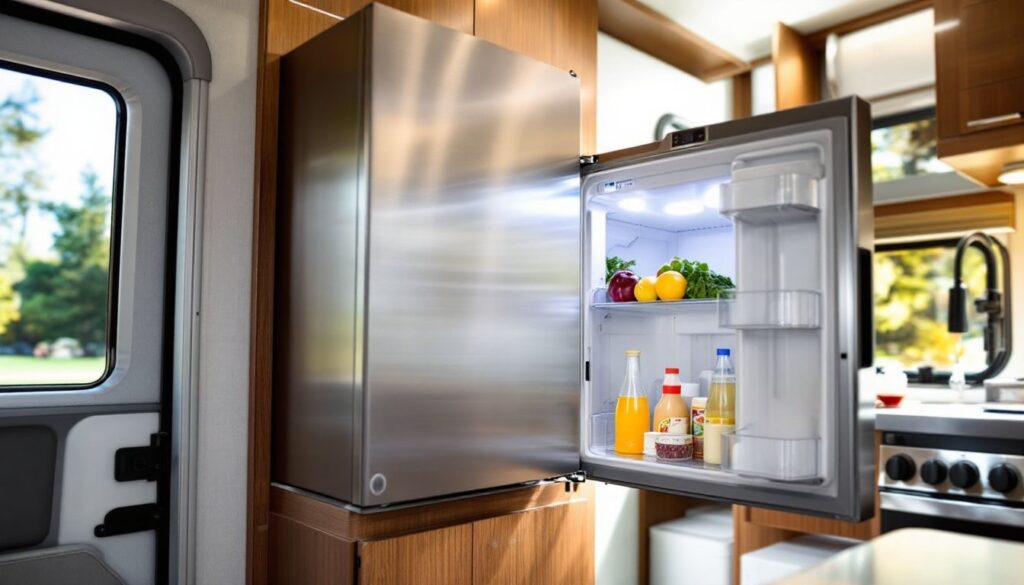
A camper refrigerator is one of the most essential systems in any RV or camper, right up there with the water tank and electrical panel. Without reliable cooling, every camping trip means relying on coolers, ice, and quick meal planning, which takes the fun out of the adventure. Whether you’re upgrading an older unit or outfitting a new camper, understanding your refrigerator options makes the difference between spoiled food and fresh meals at the campsite. This guide walks you through the types available, key features to evaluate, and straightforward maintenance tips to keep your camper refrigerator running strong for years.
Table of Contents
ToggleKey Takeaways
- A camper refrigerator operates on 12V DC, 110V AC, or propane power, providing flexibility for both shore-powered and off-grid camping adventures.
- Absorption refrigerators run quietly and work well in cool climates but cool slowly in high heat, while compressor models offer faster cooling and better performance in hot weather at the cost of higher power draw.
- Measure your refrigerator bay dimensions and consider capacity, temperature controls, and power source compatibility before purchasing a camper refrigerator to ensure proper fit and functionality.
- Clean condenser coils monthly, inspect door gaskets, and keep ventilation vents unobstructed to maintain optimal cooling performance and extend your camper refrigerator’s lifespan.
- Level your RV and address power supply issues early, especially for 12V operations, to prevent cooling failures and ensure efficient operation during camping trips.
What Is A Camper Refrigerator And Why It Matters
A camper refrigerator is a specialized cooling unit designed to operate on 12V DC power, 110V AC power, or propane, giving you flexibility whether you’re plugged into shore power, running the generator, or boondocking off-grid. Unlike household refrigerators that rely exclusively on AC current, most RV models shift between power sources automatically, a feature called three-way operation on many units.
Why this matters: a standard kitchen refrigerator draws too much power for a camper’s electrical system and can’t operate on propane, making it impractical for mobile living. A small RV refrigerator, by contrast, is engineered for efficiency and multi-fuel compatibility. It’s also physically compact, typically 4 to 8 cubic feet, to fit standard camper bay openings. Reliable cooling means you keep perishables safe longer, reduce waste, and spend less time restocking supplies at every stop.
Types Of Camper Refrigerators: Find Your Best Match
Absorption Refrigerators
Absorption models use propane or AC power to heat a solution that pulls heat away from the fridge interior, no moving compressor parts. They run quietly and work well in dusty, bumpy RV environments because there’s no compressor to shake or fail from vibration.
Trade-offs: absorption units cool more slowly than compressor models and perform worse in high ambient temperatures (above 95°F). They also require propane hookup and produce a small amount of smell during operation. If you boondock frequently in cooler regions or prioritize silence, absorption refrigerators remain a solid choice.
Compressor Refrigerators
Compressor models work like your home refrigerator, a compressor circulates refrigerant through coils, removing heat actively. They cool faster and maintain temperature more reliably in hot climates, making them increasingly popular in modern campers.
Trade-offs: compressor units draw more electrical power (typically 200–400 watts running), require adequate ventilation to expel heat, and are louder than absorption models. They also can’t operate on propane. If you rely on shore power or a generator and want efficient, modern cooling, compressor refrigerators deliver better performance. Many RV owners today choose compressor units and pair them with robust auxiliary batteries or solar panels to manage power demand.
Essential Features To Look For When Shopping
Capacity and Layout: Most camper refrigerators range from 4 to 8 cubic feet. Measure your refrigerator bay width, height, and depth before shopping, nominal dimensions matter here. A 6 cubic-foot model might look spacious in a showroom but not fit your cabinet bay. Consider how you use the space: does your family prefer a big freezer section, or more fresh-food shelf room? Some models offer adjustable shelving to customize your layout.
Temperature Control: Look for models with separate compartment controls (freezer and fridge at different temps) or a single thermostat. Digital controls let you set precise temperatures: manual dials are simpler but less accurate. Brands like Dometic and Norcold dominate the RV market, and both offer reliable units across price points.
Power Source Compatibility: If boondocking appeals to you, a three-way (propane/12V/110V) or two-way (12V/110V) unit gives flexibility. If you’re always shore-powered, a compressor model on 110V alone works fine. Battery-draw ratings matter too, a 12V compressor unit pulling 400 watts continuously drains most RV batteries in hours without solar or generator backup.
Energy Efficiency and Cooling Performance: Compressor models typically outperform absorption units in sustained heat, though they consume more power. Check manufacturer specs for cooling capacity in Btu or how long the fridge maintains 35°F in a 95°F ambient environment. Higher-end models include insulation upgrades and efficient compressors that reduce runtime and power draw.
Installation and Mounting: Some camper refrigerators slide out for servicing: others are permanently mounted. Confirm the electrical and propane connections match your RV’s infrastructure. Installation can range from a simple swap (if replacing the same model) to a day’s work if you’re rewiring propane lines or upgrading electrical circuits. A few RV owners handle this themselves: others hire a certified RV technician, especially for propane work, which carries safety and code considerations.
Tips For Maintaining Your Camper Refrigerator
Clean the Condenser Coils Regularly: Dust and road debris clog the exterior coils, forcing the cooling system to work harder and burn more power. Every month or two, depending on terrain, inspect the rear or bottom grille. Blow out dust with compressed air or a soft brush, never use water. Dirty coils are the leading cause of weak cooling, and this 10-minute task prevents bigger problems.
Keep the Interior and Door Seals Clean: Wipe shelves and walls quarterly to prevent food spills from hardening and blocking air circulation. Check the door gasket (the rubber seal) for cracks or warping, a loose seal lets cold air escape and forces the compressor to run longer. If the gasket is torn, it’s an inexpensive replacement and usually takes 15 minutes.
Level the RV for Optimal Performance: Absorption refrigerators especially perform poorly when tilted. If you’re boondocking, use leveling blocks or jacks to keep the camper as close to level as possible, within a degree or two is fine. Compressor units are more forgiving, but proper leveling helps all cooling systems run efficiently.
Allow Ventilation Space: Make sure nothing blocks the refrigerator’s exhaust vents. On modern campers, this is usually the rear grille. Blocked airflow causes the unit to overheat and cycle excessively, shortening its lifespan. During camp setups, keep storage bins and propane lines clear of the cooling vents.
Address Power Supply and Battery Issues Early: If your camper refrigerator is struggling to cool and you’re on 12V power alone, the problem is often insufficient voltage due to a weak battery or undersized wiring. A multimeter check of battery voltage during fridge runtime tells you if the battery is dropping below 11.5V, which signals trouble. Adding solar panels or upgrading to a lithium auxiliary battery solves this for many RV owners.
Follow the Manual’s Seasonal Storage Tips: If you winterize your camper, drain the propane system and disconnect the fridge per the manufacturer’s instructions. Leaving a propane-absorption unit running with no fuel in freezing conditions can damage the absorption chamber. Store the fridge with the door cracked open to prevent mold inside.
Conclusion
Choosing and maintaining a camper refrigerator comes down to matching your power setup, climate, and camping style to the right unit. Absorption models suit quiet, cool-climate trips: compressor units excel for hot weather and modern RVs with robust electrical systems. Regular condenser cleaning, gasket checks, and proper ventilation keep your fridge humming for years. Take time upfront to measure your bay, understand your power budget, and install the unit correctly, your meals (and your peace of mind) depend on it.