
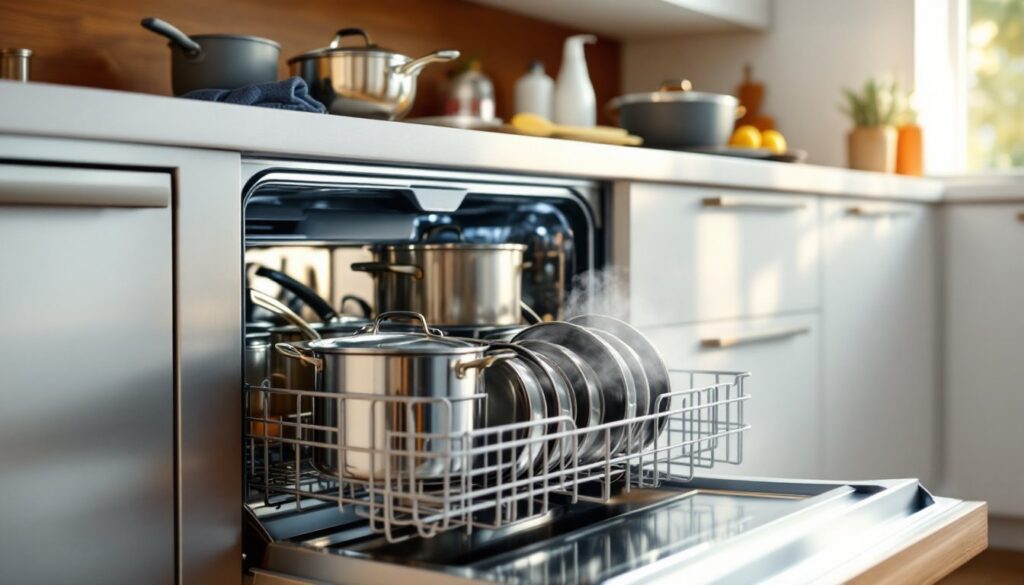
Tired of hand-washing cookware after dinner? You’re not alone. Dishwasher safe pots and pans are a game-changer for busy homeowners who want to spend less time at the sink and more time enjoying their meals. Whether you’re upgrading your entire kitchen or adding a few key pieces, understanding what makes cookware truly dishwasher safe, and how to maintain it, will help you make smarter purchasing decisions. This guide walks you through material options, selection criteria, and care tips to help you find the best dishwasher safe cookware that fits your cooking style and budget.
Table of Contents
ToggleKey Takeaways
- Dishwasher safe pots and pans must have securely riveted handles and durable finishes to withstand high water pressure, hot water (140–160°F), and abrasive detergents without damage or peeling.
- Stainless steel dishwasher safe cookware offers superior durability and thermal shock resistance, while non-stick options provide convenience but benefit from hand-washing every three to five uses to extend coating lifespan.
- When selecting a dishwasher safe cookware set, choose pieces that match your actual cooking habits—a starter set of just a skillet, saucepan, and Dutch oven often outperforms bloated multi-piece sets you won’t use.
- Proper care extends cookware longevity: load pans on the bottom rack, use mild detergents, hand-wash after initial use to remove manufacturing oils, and store with lids off to prevent corrosion.
- Induction-compatible dishwasher safe cookware costs 10–20% more but is essential if you own an induction range, and reputable brands offer 5- to 10-year warranties as a sign of quality.
What Makes Pots And Pans Dishwasher Safe
Not all cookware plays nicely with dishwashers. The term “dishwasher safe” means the pans can withstand repeated cycles without damage, but the devil’s in the details.
First, understand that dishwashers expose cookware to high water pressure, hot water (typically 140–160°F), and abrasive detergent. Handles must be securely riveted and made from materials that won’t weaken or separate, wood and hollow plastic handles are red flags. The pan’s finish and coating need to resist degradation over time: cheap non-stick surfaces peel or flake, while poorly sealed stainless steel can develop discoloration or pitting.
Lid compatibility matters too. Glass lids are fine, but metal lids sometimes cause corrosion when they touch other items. Always check the manufacturer’s label before assuming a full set is safe, some cookware sets include pieces (like copper-bottomed pans) that require hand-washing.
Another consideration: the dishwasher safe claim may come with caveats. A pan might be “dishwasher safe” but perform better hand-washed to preserve its non-stick coating longer. Read the fine print on the packaging or the brand’s website to understand what you’re actually getting.
Top Materials For Dishwasher Safe Cookware
Stainless Steel: Durability And Style
Stainless steel is the workhorse of dishwasher-safe cookware. It resists corrosion, won’t scratch easily, and handles thermal shock (jumping from a hot burner to cold dishwasher water) better than most materials. Best dishwasher safe cookware in the stainless steel category typically features a fully encapsulated aluminum or copper core bonded to the bottom, which improves heat distribution and prevents warping over time.
The trade-off? Stainless steel doesn’t conduct heat as evenly as bare aluminum, so you may need to use slightly higher heat or give the pan a moment to fully preheat. Food also tends to stick more, though a quick seasoning with oil during cooking helps. Many homeowners find the durability and ease of cleaning worth the minor extra prep.
When shopping for stainless steel dishwasher safe cookware set, look for tri-ply or multi-ply construction, which means three or more bonded layers. This prevents buckling over time. Handles should be stainless steel, silicone, or heat-resistant nylon, not plastic or wood.
Non-Stick Cookware: Convenience And Care
Non-stick surfaces make cooking and cleanup effortless, and many modern non-stick cookware dishwasher safe options are genuinely dishwasher-rated. But, the coating requires gentler treatment to last. Even in a dishwasher, avoid stacking, use wooden or silicone utensils, and consider the top rack for extra protection.
The latest non-stick coatings (PTFE-free ceramic or hard-anodized aluminum) are more durable than older Teflon versions. Ceramic non-stick is trendy but can chip if bumped, it’s not as forgiving as hard-anodized aluminum, which offers better longevity for daily use. Best dishwasher safe pans in the non-stick category often use hard-anodized construction because the aluminum base is darkened and hardened at a molecular level, making it tougher.
One practical note: dishwasher-safe non-stick usually means the coating won’t degrade, but hand-washing between every few uses extends the pan’s lifespan significantly. If you run your dishwasher multiple times weekly, stainless steel may be the smarter investment for non-stick cookware reviews and ratings.
How To Choose The Right Dishwasher Safe Set For Your Kitchen
Selecting a cookware set dishwasher safe requires assessing your cooking habits and kitchen workflow, not just price tags.
Start by identifying how often you cook and what you make most. A home cook who makes pasta, soups, and sauces regularly will use a 5- to 7-quart stockpot more than someone who mostly sautés vegetables. If you’re buying a full cookware set dishwasher safe, ensure you’ll actually use every piece: don’t pay for unused clutter. A starter set of just a 10-inch skillet, 2-quart saucepan, and 5-quart Dutch oven serves most home kitchens well and costs less than bloated 12-piece sets.
Next, consider your stovetop type. All dishwasher-safe cookware works on gas and electric coil burners, but if you have induction, verify the manufacturer’s rating, not all stainless steel is magnetic enough for induction cooking. Induction-compatible cookware sometimes costs 10–20% more but is worth it if you own an induction range.
Weight and balance matter more than marketing hype. Pick up a pan in-store if possible, a well-balanced skillet has the weight distributed so it doesn’t tip forward when you’re holding just the handle. Cheap cookware often feels tippy and increases spill risk.
Finally, check the warranty. Reputable brands offer 5- to 10-year warranties against defects like handle separation or warping. This is a signal they stand behind their product. Budget cookware sometimes comes with no warranty, which reflects the manufacturer’s confidence level.
Caring For Your Dishwasher Safe Cookware
Just because cookware is dishwasher safe doesn’t mean tossing it in and forgetting about it maximizes its lifespan.
Before the first wash: Hand-wash new cookware with hot soapy water to remove manufacturing oils and dust. Dry thoroughly. This isn’t overcautious, it removes contaminants that can affect cooking and appearance.
Loading the dishwasher: Place pans on the bottom rack where water pressure is gentler than the top rack. Avoid stacking non-stick pans directly: separate them with a cloth or place them side-by-side if space allows. Never load with metal utensils or sharp items that might scratch. Separate lids from pans to prevent corrosion where they meet.
Detergent choice: Harsh, abrasive detergents wear finishes faster. Powders are often more abrasive than gels or pods. If you notice discoloration on stainless steel after a few cycles, switch brands, some detergents are gentler on cookware than others. Kitchen appliance care resources often recommend milder commercial detergents or even vinegar rinses to preserve cookware.
Hand-washing when it matters: For non-stick cookware, hand-wash once every three to five uses. For stainless steel, hand-washing isn’t essential but can extend finish clarity. Use a soft sponge and warm soapy water, avoid steel wool or scouring pads.
Storage: Store pans with lids off to prevent moisture buildup. If you must stack them, use paper towels between each layer to prevent scratches. Moisture trapped under lids accelerates corrosion, especially on stainless steel. Home maintenance guides often emphasize proper storage as a simple way to extend cookware life by years.
Conclusion
Dishwasher safe cookware is a practical investment for any homeowner looking to save time and effort in the kitchen. Whether you choose a stainless steel set for durability or non-stick pans for convenience, understanding construction materials and proper care ensures your cookware performs well for years. Take time to match your choice to your cooking style, verify dishwasher compatibility before purchasing, and follow loading and storage practices that preserve the finish. With the right setup, you’ll enjoy clean pans with far less work.