If you’ve ever stared at freshly cleaned windows only to spot streaks catching the afternoon light, you know the frustration. A foam glass cleaner changes that dynamic entirely. Unlike liquid sprays that drip and run, foaming glass cleaner creates a thick, clinging layer that clings to vertical surfaces long enough to dissolve grime without leaving residue behind. Homeowners and renters alike are ditching traditional methods for foam cleaners because they work faster, leave fewer streaks, and require less elbow grease. In this guide, we’ll walk through what foam glass cleaner actually is, why it works so well, and exactly how to use it to get restaurant-quality results on your windows, mirrors, and glass surfaces.
Table of Contents
ToggleKey Takeaways
- Foam glass cleaner creates a thick, clinging layer that stays on vertical surfaces longer than liquid sprays, minimizing streaks and reducing the need for quick wiping.
- The surfactant-based formula in foam glass cleaner uses chemistry to break down oils and grime while extended dwell time (20–45 seconds) gives active ingredients time to work effectively.
- Foam cleaners offer superior control compared to traditional methods—they don’t drip or run, making interior glass cleaning faster, more forgiving for first-time users, and less messy overall.
- Using microfiber cloths and working from top to bottom with foam glass cleaner delivers restaurant-quality results on windows and mirrors without requiring professional technique or specialized tools.
- Regular weekly or bi-weekly cleaning with foam glass cleaner prevents heavy grime buildup and maintains pristine glass surfaces with minimal elbow grease.
- Foam glass cleaner outperforms vinegar-and-newspaper methods and traditional liquid sprays for hard-water areas, while remaining a more accessible and affordable alternative to professional squeegee or hydrophobic coating treatments.
What Is Foam Glass Cleaner and How Does It Work?
A foam glass cleaner is a surfactant-based solution dispensed from a pressurized bottle or pump that creates a thick, airy lather when applied. The formulation typically contains water, alcohol (usually isopropyl), surfactants to break down oils and grime, and propellant to aerate the mixture. When you spray it onto glass, the foam clings to the surface instead of running straight down like traditional liquid cleaner.
The magic happens chemically. Surfactants are molecules with one end that loves water and another that loves oil, they essentially grab onto dirt particles and suspend them in the solution so they rinse away cleanly. The foam structure traps these particles and keeps the cleaner in contact with the glass longer, giving the active ingredients time to work. That extended dwell time is why foaming glass cleaner minimizes the streaking problem: you’re not chasing a runny liquid down the pane or dealing with uneven evaporation that leaves hard-water deposits.
Unlike traditional glass cleaner spray, which you apply and immediately wipe, a foaming glass cleaner formula often lets you wait 30 seconds to a minute before wiping. This isn’t extra time, it’s intentional. The foam holds the cleaner exactly where you need it while breaking down stubborn fingerprints, water spots, and window grime. Some homeowners even use a foaming glass cleaner foam variant with minimal rubbing alcohol for streak-sensitive situations.
Why Homeowners Love Foam Cleaners
Speed is the first reason homeowners switch to foam. A standard liquid glass cleaner requires you to spray, wipe quickly before it dries, and often go over the same spot twice to avoid streaks. Foam cleaners collapse into a thin film that you can take your time wiping, if you miss a corner, you can come back to it without the window drying unevenly. That flexibility saves frustration, especially on large windows or mirrored walls.
Control is the second draw. Because foam stays put, you’re not fighting gravity or managing drips that require towels under your feet. This makes cleaning interior glass surfaces, like bathroom mirrors and kitchen windows, far less messy. You can apply foam from top to bottom without worrying about overspray or runoff damaging nearby surfaces.
Third, foam formulations often contain ingredients specifically engineered to reduce water spotting. Hard water deposits are the sneaky culprit behind many post-cleaning streaks. Foaming glass cleaner formulas often include chelating agents that prevent minerals from re-depositing on the glass. According to how-to resources on streak-free mirror cleaning, the method of application matters as much as the product itself, and foam’s ability to stay on the surface gives it an advantage.
Finally, foam is forgiving with technique. You don’t need a specific squeegee angle or professional wiping motion. Most people achieve good results with a simple microfiber cloth and a gentle wipe-down, making this an ideal project for first-time cleaners and households where multiple people share cleaning duties.
Step-by-Step Guide to Using Foam Glass Cleaner
Using foam glass cleaner is straightforward, but following a sequence ensures the best results.
-
Prepare the workspace. Clear any items sitting on sills or ledges. If you’re cleaning exterior windows, make sure the glass is dry to the touch (morning dew or rain residue can dilute the cleaner). For interior mirrors or glass, this step takes five seconds, just make sure the area is clutter-free.
-
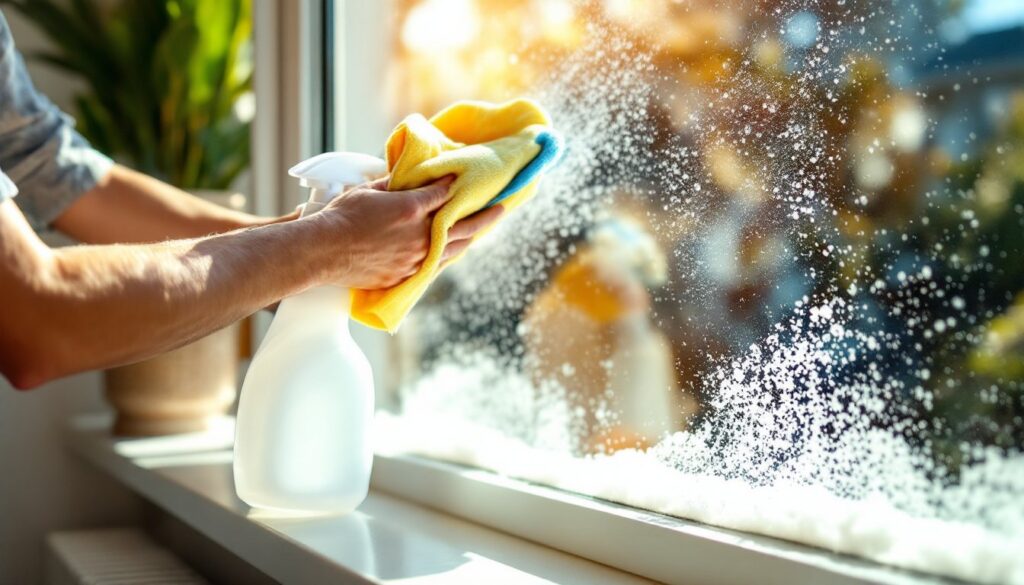
Apply the foam generously. Spray or pump the cleaner directly onto the glass surface. Don’t be shy: a thick, visible layer is what you want. A single application should cover roughly 2–3 square feet of window area, depending on the foam’s density. If you’re using a foaming glass cleaner foam version, expect it to expand slightly as you apply it.
-
Let it sit briefly. Wait 20–45 seconds. This dwell time allows the surfactants to break down oils and grime. You’ll notice the foam may settle slightly as gravity tugs at it, this is normal.
-
Wipe with a microfiber cloth. Use downward strokes, working from top to bottom. Microfiber is essential here because it grips the dissolved grime and pulls it away from the glass without leaving lint (unlike paper towels). Fold your cloth into quarters as you go so you’re always wiping with a clean section.
-
Check for residue. If you see any streaks, dampen a corner of your cloth with distilled water (not tap water) and gently polish those spots. Distilled water won’t leave mineral deposits like hard water does.
-
Dry if needed. Most foam glass cleaner formulations evaporate cleanly, but if your area has very hard water, a final light buff with a dry cloth eliminates any water marks.
Best Practices for Streak-Free Results
Microfiber cloths are non-negotiable, they’re inexpensive and last for dozens of uses if you wash them separately (avoid fabric softener, which coats the fibers and reduces effectiveness). The cloth itself does as much work as the cleaner.
Always apply foam to the glass, never to the cloth. Spraying the cloth first dilutes the solution and makes it harder to control where the cleaner goes. Working from top to bottom prevents you from dripping liquid onto already-cleaned sections below.
Temperature matters slightly. Foam cleaners work best when the glass is cool (room temperature or cooler). Applying them to sun-heated windows can cause uneven drying and streaking. On hot days, clean windows in the morning or shade, or wait until late afternoon.
Comparing Foam Cleaners to Other Glass Cleaning Methods
Foam vs. Traditional Liquid Spray: Liquid glass cleaners are cheaper and more widely available, but they run quickly and require faster wiping. If your household has hard water, liquid cleaners are more likely to leave visible residue. Foam’s extended contact time gives it an edge for mineral-heavy water and larger windows. But, liquid spray works fine for quick touch-ups on small areas.
Foam vs. Newspaper and Vinegar: The old vinegar-and-newspaper trick still works, but it’s labor-intensive and leaves newsprint residue on your hands. Foam requires fewer wipes and no special materials beyond a cloth you already own. Vinegar solutions also smell stronger and take longer to break down stubborn grime.
Foam vs. Squeegee Method: Professional window cleaners use squeegees with soapy water, which is extremely effective but requires technique, specialized tools, and practice. For a homeowner cleaning interior windows or bathroom mirrors, foam is more accessible and delivers 90% of the professional result with 5% of the learning curve.
Foam vs. Self-Cleaning or Hydrophobic Coatings: Some homeowners invest in hydrophobic window treatments that repel water and reduce cleaning frequency. These work well on exterior windows but cost significantly more upfront. Foam cleaners are a low-cost, no-commitment alternative for immediate results. Many people use both, foam for regular cleaning and coatings on high-exposure exterior windows. Comprehensive home improvement guides often cover both approaches depending on your property’s needs.
Top Tips for Maximizing Your Foam Cleaner Investment
Store properly. Keep foam glass cleaners in a cool, dark place. Sunlight degrades the formula and can affect spray pressure over time. Most foam products last 12–18 months if stored at room temperature.
Don’t oversaturate. Using more foam doesn’t clean faster, it just means more wiping and more cloth changes. A layer about the thickness of shaving cream is ideal. Excessive foam also requires more water to rinse away any residue in very hard-water areas.
Use the right cloth every time. Microfiber is cheap and durable. Buy several so you always have clean cloths on hand. Wash them in warm water without fabric softener. Some homeowners keep a dedicated microfiber cloth just for glass to avoid mixing it with general cleaning cloths.
Clean regularly to reduce buildup. Weekly or bi-weekly foam cleaning keeps windows looking pristine and prevents heavy grime from accumulating. Heavy buildup requires longer dwell time and more elbow grease, so regular maintenance is actually the easiest approach. Simple cleaning hacks and home organization tips emphasize this consistency principle across all household cleaning.
Test on a hidden spot first. If you’re using foam on a delicate surface like antique mirror glass or special coatings, apply a small amount in an inconspicuous area and wipe to confirm no damage occurs. Older glass or specialty finishes occasionally react unpredictably to alcohol-based cleaners.
Consider buying bulk if you use it weekly. Many manufacturers sell foam glass cleaner in larger containers or multipacks at a better per-ounce cost than single bottles. If your household does weekly window cleaning, bulk buying saves money over six months.
Conclusion
Foam glass cleaner delivers on its promise: faster cleaning with fewer streaks and less frustration. The combination of surfactant chemistry, extended dwell time, and ease of use makes it the practical choice for homeowners who want results without a steep learning curve. Whether you’re tackling a full house of windows, bathroom mirrors, or glass door panels, keeping a bottle on hand costs little and saves time on every cleaning day. Pair it with quality microfiber cloths and a straightforward technique, and you’ll achieve the clean glass results that make a room feel brighter and more finished.