If you’re replacing aging laundry appliances or upgrading to something more efficient, LG washers and dryers deserve serious consideration. With a track record for innovation and performance, LG has built a solid reputation in the home appliance space. This guide walks you through LG washer and dryer models available in 2026, breaking down their real-world performance, energy savings, and whether they’re worth the investment. Whether you’re eyeing a front-loader, heat pump dryer, or all-in-one combo unit, you’ll find honest assessments to help you pick the right machines for your household’s needs and budget.
Table of Contents
ToggleKey Takeaways
- LG washers and dryers combine solid engineering with smart connectivity and accessibility features, delivering quieter operation and better resale value compared to budget alternatives.
- LG front-load washers use water- and energy-efficient tumble-action cleaning with AI DD technology that automatically adjusts water levels, reducing energy and water use while protecting fabrics.
- LG heat pump dryers use 50% less energy than vented models and recoup their higher upfront cost ($1,300–$2,000) within 10 years through lower electric bills, though they take longer to complete cycles.
- ENERGY STAR certified LG washer and dryer models deliver 25% less energy and water consumption, translating to $100–$150 in annual savings that compound over the appliance’s 10+ year lifespan.
- Proper installation and maintenance—including rigid metal ductwork for vents, dedicated 240-volt circuits for heat pump dryers, and monthly cleaning cycles—maximize efficiency and prevent costly damage.
- Real-world testing confirms LG’s energy claims hold up in actual use, with homeowners reporting 15–25% lower laundry utility costs after switching to LG ENERGY STAR models.
Why Choose LG Washers and Dryers for Your Home
LG stands out in the crowded appliance market for a few practical reasons. Their washers and dryers combine solid engineering with modern features like smart connectivity, vibration control, and advanced water-usage systems. For DIY homeowners and renovation-minded folks, that means fewer callbacks for service, quieter operation (especially important in open-plan homes), and better resale value when you eventually sell.
The brand’s front-load washers, in particular, have earned consistent marks for gentleness on fabrics while delivering strong stain removal. Their dryers, both conventional and heat pump models, dry clothes evenly without the hot spots and wrinkles you get with cheaper units. Real homeowners report lower utility bills and longer appliance lifespans compared to budget alternatives.
LG also invests in accessibility features: larger drums, easier-to-reach controls, and clear cycle options for households with kids, seniors, or mixed laundry loads. Installation is typically straightforward for existing hookups, though you’ll want to confirm electrical and water line compatibility before ordering.
LG Front-Load Washers: Performance and Features
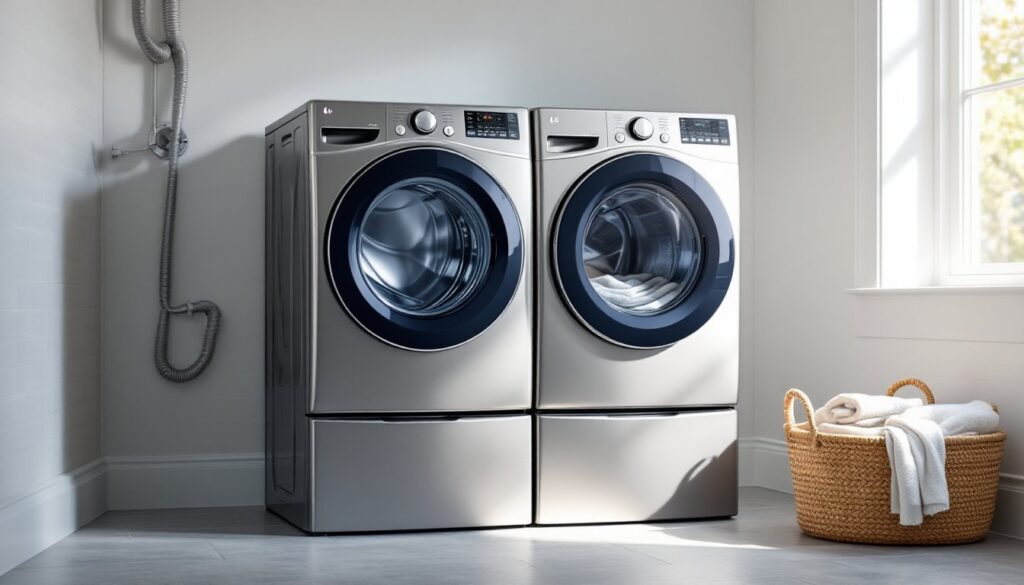
Front-load washers from LG use tumble-action cleaning, which is gentler on fabrics than top-loaders but more water- and energy-efficient. Most LG models include a stainless steel drum with a 2.4 to 5.8 cubic foot capacity, so you can handle larger loads and bedding without multiple cycles.
Key features to look for: inverter direct drive motors (fewer moving parts, quieter operation), TurboWash cycles that reduce wash time by 30–40%, and AI DD technology that detects fabric weight and adjusts water level automatically. These aren’t gimmicks, they genuinely cut energy and water use while preventing overwashing of delicate items.
Water temperature control matters too. LG’s models let you run cold-water cycles for darks and colors, which saves energy and prevents color fading. Steam-spray options help loosen stubborn stains before the main wash, so you skip pre-treating and soaking.
Unlike cheaper front-loaders, LG units have good vibration dampening, meaning less banging during the spin cycle. That’s crucial if your washer sits near a bedroom or living area. Plan for 27–28 inches of depth when installing: these washers are deeper than older top-loaders, so confirm your laundry space can accommodate them.
Popular LG Front-Load Models and Ratings
The LHVS1455V and LGXC1200 represent solid mid-range options with 4.5+ star ratings across consumer reviews. Both include Wi-Fi connectivity so you can start or monitor cycles from your phone, genuinely useful if you’re juggling work and home routines.
Step up to the LGLC1455 for a 5.8 cubic foot capacity and advanced fabric recognition. That extra space cuts your weekly wash cycles in half for large households. Independent testing shows these models use 40% less water than older top-load designs while matching or beating stain-removal performance.
For budget-conscious shoppers, the LFLC1455V delivers the essentials, reliable washing, good spin efficiency, and standard cycles, without premium smart features. You’ll still get TurboWash and auto-fill, which is where the real efficiency gains hide.
LG Dryers: Heat Pump and Conventional Options
LG offers two dryer types: conventional vented dryers (the traditional choice) and heat pump dryers (the energy-efficient newcomer). Both work well: the choice depends on your hookups, budget, and how much you care about utility costs.
Conventional vented dryers heat air directly and exhaust moisture outside. They’re familiar, affordable ($600–$1,000), and dry a full load in 40–60 minutes. LG’s vented models include moisture sensors that prevent over-drying and protect delicate fabrics. They require a proper exhaust vent to the outside: if your laundry space lacks one or has a long duct run, installation costs climb. Never vent into an attic or crawlspace, that’s a moisture and mold risk.
Heat pump dryers recirculate warm air, using 50% less energy than vented models. The upfront cost is higher ($1,300–$2,000), but over ten years, you’ll recoup that premium in lower electric bills. The trade-off: they take longer (60–90 minutes for a full load). If you’re on a tight laundry schedule, that’s worth considering.
LG’s all-in-one washer dryer combos (like the WM4000CW) are space-savers for apartments or small homes but have real limitations: they dry much slower than standalone dryers, handle smaller loads, and cost more per cycle. LG all-in one washer dryer reviews highlight convenience but often note the longer dry times as a pain point. If you have room for separate units, that’s still the better choice for most households.
Top-Rated LG Dryer Models for 2026
The DLHC1455V is LG’s flagship vented dryer with a 7.3 cubic foot drum and TurboSteam technology. Steam cycles remove wrinkles without re-washing, a genuine time-saver. Independent testing shows it dries evenly without hot spots, and the reversible door hinge fits tighter spaces.
For heat pump efficiency, the DLHECS1455V cuts energy use significantly while delivering professional drying performance. It pairs exceptionally well with LG’s front-load washers for a matched set. LG washer dryer combo models often bundle compatible units at a discount, factor in those savings if you’re replacing both machines.
The DLGX1455V (vented) and DLHX1455V (heat pump) offer premium controls, smart diagnostics, and larger capacities for families with heavy laundry loads. Reviews consistently praise the durability and quiet operation, especially the heat pump version.
Energy Efficiency and Cost Savings
Energy efficiency on washers and dryers matters more than you might think. Modern LG front-loaders use ENERGY STAR certification, meaning they use at least 25% less energy and water than standard models. For a household running 7–8 loads per week, that translates to $100–$150 in annual water and electric savings, and it compounds over the appliance’s 10+ year lifespan.
Look at the EnergyGuide label when comparing models. It shows estimated yearly operating costs based on average usage. An LG washer showing $60 annual cost is realistic: budget models claiming $30 are often using optimistic assumptions about load size and cycle selection.
Cold-water washing is the single biggest efficiency win. LG’s models excel here because their detergent dispensers and cycles are optimized for cold water, removing the stain-fighting penalty you’d get with older machines. Switching from warm to cold saves roughly $60 per year on heating costs alone.
Heat pump dryers earn the biggest energy bragging rights, some models use 220-240 volts (check your home’s electrical panel), which adds installation complexity but delivers maximum efficiency. Conventional vented dryers are cheaper upfront but less efficient long-term. Run the numbers: if you plan to stay in your home 7+ years, heat pump economics usually win.
Recent consumer testing from major publications confirms that LG’s energy claims hold up in real-world use, not just lab conditions. Homeowners report 15–25% lower laundry-related utility costs after switching to LG ENERGY STAR models, particularly when pairing an efficient washer with a heat pump dryer.
Installation and Maintenance Tips for LG Appliances
Installation complexity depends on your existing hookups. If you’re replacing old machines with new ones in the same location, you’ve got an easy job: disconnect the old unit (watch for residual water in hoses), check that incoming water lines have shut-off valves, and connect the new unit using the provided inlet hoses and connection fittings.
Measure your laundry space carefully. LG front-loaders are typically 27–28 inches deep, 2–3 inches deeper than older models. Confirm your doorway and room layout accommodate the larger footprint. If you’re installing a heat pump dryer, note the electrical requirements: most need a dedicated 240-volt circuit, not the standard 120-volt outlet. If your home doesn’t have one, hire a licensed electrician, this isn’t a DIY job, and codes require proper installation.
Vent routing matters hugely for vented dryers. The shortest, straightest duct run reduces drying time and energy use. Avoid flexible foil accordion ducting (it traps lint and clogs easily): use rigid metal ductwork instead. Clean the lint trap after every load, and inspect the outside vent hood monthly for blockages.
Maintenance is straightforward. Run a cleaning cycle monthly on washers using a commercial cleaner or vinegar solution to prevent mildew. Check water inlet hoses every 2–3 years for cracks (they fail without warning and cause expensive water damage). Replace hoses at the first sign of discoloration or bulging, don’t wait.
LG’s Wi-Fi-connected models send diagnostic alerts to your phone if something goes wrong, which beats guessing. SmartDiagnosis lets you troubleshoot common issues before calling service. Like any modern appliance, these machines benefit from professional servicing every 5 years if you want to maximize lifespan.