You’re standing in the kitchen appliance aisle, eyeing a Midea dishwasher, and wondering if it’s the real deal or just budget-brand hype. If you’ve been pricing dishwashers lately, you know the sticker shock, brands like Bosch and KitchenAid cost a small fortune. Midea offers a compelling alternative at a fraction of the price, but does it actually clean your dishes and last long enough to justify the investment? This honest Midea dishwasher review cuts through marketing noise to help homeowners understand what they’re really getting. We’ll cover performance, reliability, energy costs, and how they stack up against the big names so you can make an well-informed choice for your kitchen.
Table of Contents
ToggleKey Takeaways
- Midea dishwasher reviews reveal solid cleaning performance for everyday loads with water efficiency around 3 gallons per cycle and annual operating costs of $100–$150, making them a budget-friendly alternative to premium brands like Bosch and KitchenAid.
- Most Midea dishwashers carry ENERGY STAR certification and feature stainless steel tubs, multiple wash cycles, and quiet operation at 47–52 decibels, delivering mid-range specs at low-range prices without unnecessary complications.
- Reliability is mixed with some units lasting 5+ years while others develop seal or motor problems within 2–3 years, covered by a standard 1-year warranty that’s shorter than competitor offerings.
- Midea dishwashers are ideal for budget-conscious homeowners, rental properties, and families running daily loads, but may not suit luxury kitchens, areas with hard water, or those prioritizing whisper-quiet operation.
- Compared to LG and Samsung, Midea offers better value and pricing, while Bosch models provide superior build quality at 50–70% higher cost, making Midea favorable for value-focused households.
- Before purchasing, verify your kitchen’s 24-inch cabinet dimensions and calculate total 5-year ownership costs including purchase price, operating expenses ($100–$150 yearly), and potential repair costs ($200–$400 for common issues).
Who Is Midea and What Makes Them Stand Out?
Midea is a Chinese home appliance manufacturer that’s been quietly expanding into the North American market over the past decade. You’ve likely seen their products everywhere, they make refrigerators, air conditioners, washers, and yes, dishwashers. The company operates under several brand names globally, but in the U.S., they’re often sold under their own label or through exclusive partnerships with major retailers.
What makes Midea different is their manufacturing scale and pricing strategy. They’re one of the world’s largest appliance makers by volume, which means they can offer competitive prices without skipping essential features. Unlike some budget brands that cut corners on everything, Midea focuses on delivering mid-range specs at low-range prices. Their dishwashers typically include stainless steel tubs, multiple wash cycles, and quiet operation, features that used to be premium extras.
Performance and Cleaning Power: What Real Users Report
Here’s what matters most: does it actually clean your dishes? Based on real homeowner feedback, Midea dishwashers perform solidly for everyday loads. They handle standard dinner plates, glasses, and cookware without issue. The spray arms are well-designed with adequate coverage, and the water pressure is sufficient for most jobs.
Where they shine is simplicity. Midea dishwashers don’t overcomplicate things, you load it, add detergent, select a cycle, and it runs. The standard wash cycle typically takes around 2.5 to 3 hours, which is average for the category. Heavy soil or hard-to-remove food residue sometimes requires pre-rinsing or using the heavy-duty cycle, which adds time but improves results. Some models include a soil sensor that adjusts water and cycle time, which is genuinely useful for reducing water waste on lighter loads. Real-world users report that these dishwashers handle everyday use without drama, though they’re not engineering miracles, professional-grade stainless is still thicker on pricier brands.
Energy Efficiency and Operating Costs
Midea dishwashers carry ENERGY STAR certification on most models, which means they meet federal standards for water and energy consumption. A typical Midea model uses around 3 gallons of water per cycle and costs approximately $25–$35 per year to operate based on average U.S. electricity rates. That’s genuinely efficient, and cheaper than hand-washing dishes if you’re using hot water in the sink.
The stainless steel tub holds heat better than plastic, reducing the energy needed to dry dishes during the final heating cycle. Some models include soil sensors and half-load options, which further trim water and electricity use. If you run your dishwasher four times per week, you’re looking at annual operating costs in the $100–$150 range, which is competitive with major brands. Keep in mind that actual costs vary by region and local utility rates, so check your local rates if you want precise numbers.
Design, Features, and User-Friendliness
Midea dishwashers are straightforward without being stripped down. Most models feature a control panel with push buttons or a simple digital display. There’s no touchscreen gimmickry or Wi-Fi connectivity, just honest controls that do the job. For many homeowners, that’s refreshing: fewer electronic features means fewer things to break.
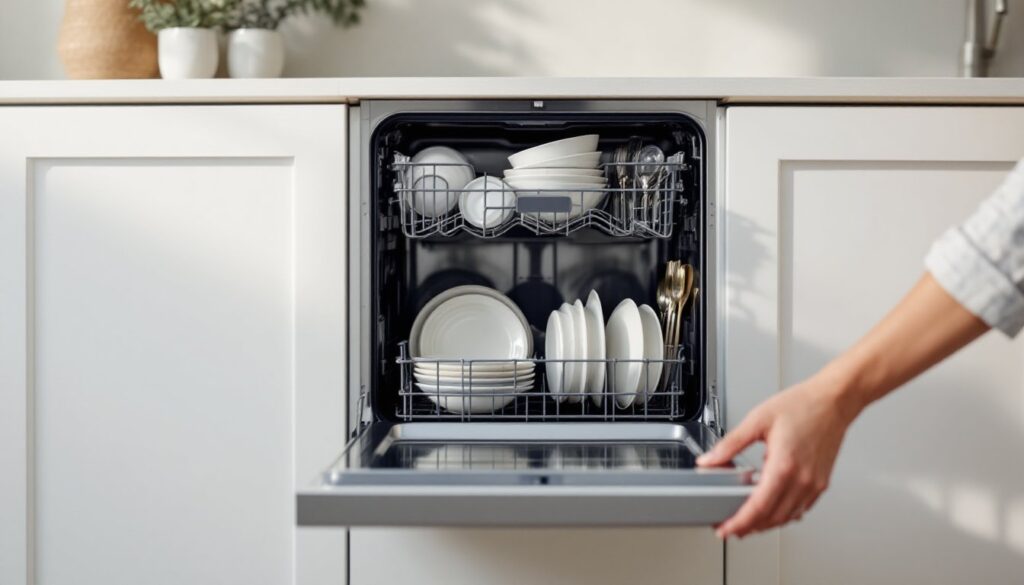
Interior design is practical. Adjustable racks, fold-down tines, and a separate cutlery basket make loading intuitive. Noise levels typically range from 47–52 decibels, which is quiet enough for open-concept kitchens but noticeably louder than premium brands (which run closer to 38–42 dB). The stainless steel finish looks clean and modern, fitting into most kitchen aesthetics without standing out awkwardly. Some models include a delay start function, which lets you schedule a wash for off-peak utility hours. It’s not revolutionary, but these features solve real problems for real kitchens.
Reliability and Warranty Considerations
This is where you need to be honest with yourself: Midea dishwashers have a mixed reliability record. Some units run for 5+ years without issues: others develop seal or motor problems within 2–3 years. Parts wear at different rates depending on water hardness, detergent choice, and how aggressively you load the machine. The spray arms, door latch, and circulation pump are the most frequently replaced components.
Most Midea dishwashers come with a 1-year parts and labor warranty, which is standard for the brand but shorter than some competitors offering 2–3 years. Extended warranties are available, typically adding $150–$300 to the purchase price. Repair costs run $200–$400 for common issues like pump replacement, which isn’t cheap but isn’t catastrophic either. Check your retailer’s return policy carefully, some allow returns up to 30 days, which gives you a window to test performance before you’re locked in.
Midea vs. Leading Competitors: How They Compare
Let’s be real: how do Midea dishwashers stack up? Good Housekeeping and other testing labs have run Midea units through cleaning performance benchmarks with solid results. Compared to LG and Samsung, Midea is quieter and often cheaper, but LG models tend to have better control interfaces and marginally superior drying performance. Against Bosch, you’re trading some build quality and quietness for significant savings, Bosch costs 50–70% more.
For homeowners on a budget, Midea competes favorably with Hisense and Insignia models, which are similarly priced but sometimes feel less refined. The key difference is that Midea includes stainless steel tubs as standard, whereas some budget rivals use plastic. The Kitchn has covered mid-range dishwashers extensively, and Midea regularly scores well for value. Premium brands like Miele and Viking offer superior longevity and repairs but cost nearly double. It comes down to your budget and how long you plan to keep the dishwasher.
Is a Midea Dishwasher Right for Your Home?
A Midea dishwasher makes sense if you’re a homeowner with these priorities: you need reliable cleaning at a fair price, you don’t obsess over whisper-quiet operation, and you’re comfortable replacing a part or two over the dishwasher’s lifespan. They’re ideal for rental properties where you can’t justify premium pricing, or for families who run the dishwasher daily and want predictable operating costs.
Skip Midea if you’re building a luxury kitchen, you live in an area with extremely hard water (which stresses pumps), or you demand 10+ year longevity without repairs. Also, if noise matters, open kitchens or kitchens adjacent to living spaces, consider spending more for a quieter unit. CNET has done head-to-head sound testing showing the difference between budget and premium models is noticeable during operation.
Before buying, check your kitchen’s dimensions carefully. Most Midea models are standard 24-inch width, so ensure it fits your cabinet opening (actual cutout dimensions vary slightly by kitchen layout). Run the numbers: compare the purchase price against your expected 5-year operating cost, plus potential repair expenses. For many households, Midea’s blend of affordability and functionality wins that math.
Final Verdict
Midea dishwashers deliver honest value. They’re not the best in the world, but they’re competent, affordable, and practical for everyday use. If you want a dishwasher that cleans dishes, uses reasonable amounts of water and energy, and doesn’t require a second mortgage, Midea belongs on your shortlist. Go in with realistic expectations, handle maintenance responsibly, and you’ll get years of reliable service. That’s the neighbor-to-neighbor truth.