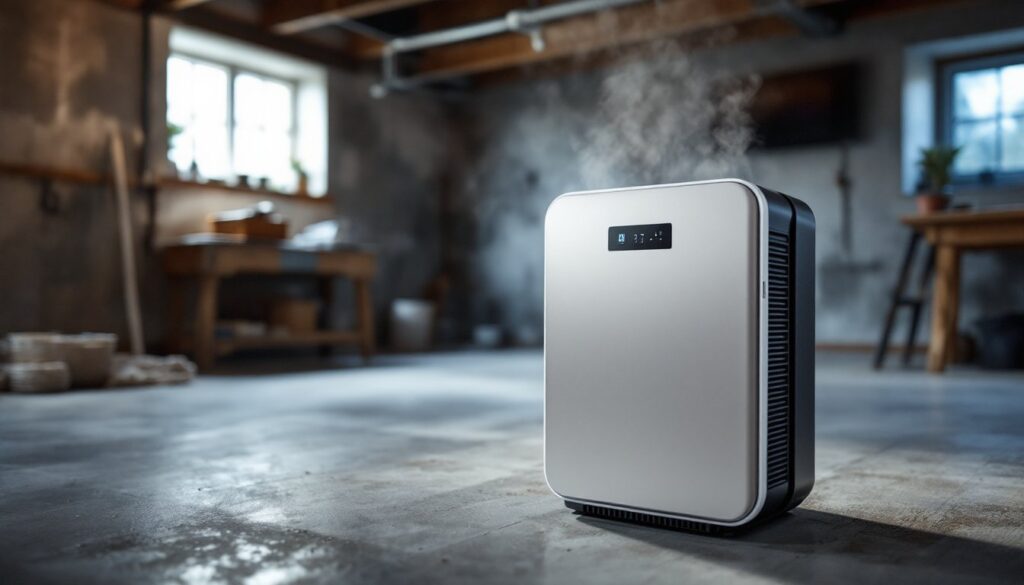
Basements are notorious for moisture, mustiness, and air quality issues that living spaces above them rarely face. Whether your basement is a finished hangout, a workshop, or just storage space, the air down there tends to accumulate stale odors, dust, allergens, and sometimes mold spores. A dedicated basement air purifier can make a real difference in keeping that space breathable and comfortable. This guide walks you through why basements need their own air purification strategy and what features matter most when picking the best air purifier for basement use.
Table of Contents
ToggleKey Takeaways
- Basements require dedicated air purification because they suffer from poor natural ventilation, excess moisture, and mold-friendly conditions that central HVAC systems don’t adequately address.
- True HEPA filters combined with activated carbon filtration are essential in a basement air purifier—HEPA captures particles while activated carbon eliminates musty odors and volatile organic compounds.
- Size your air purifier to match your basement’s square footage and aim for higher CADR and MERV ratings to ensure effective and faster air cleaning throughout the space.
- Replace HEPA filters every 6–12 months and carbon filters every 3–6 months, and maintain proper central placement away from walls to maximize airflow and purifier efficiency.
- Pair your air purifier with a dehumidifier in damp basements to reduce moisture and mold growth while filtering airborne spores and odors for optimal air quality.
- Factor replacement filter costs ($240+ yearly) into your budget when selecting a basement air purifier, since long-term maintenance expenses significantly impact overall value.
Why Basements Need Dedicated Air Purification
Basements are naturally prone to poor air quality. They’re below ground, which means less natural ventilation and more stagnant air. Moisture creeps in through cracks, concrete seepage, or simple humidity, creating an environment where mold and mildew thrive. If you’ve ever noticed that basement smell, earthy, slightly sour, that’s partly decomposing organic matter and partly microbial growth.
Unlike upper floors, basements don’t always benefit from your home’s main HVAC system circulation. Even if they do, the air often carries basement-specific pollutants: radon (a colorless, odorless radioactive gas that seeps through concrete), mold spores, dust from floor joists and stored items, and pet odors if you use the space for a workshop or lounge. Standard whole-home filters aren’t always sufficient because they’re designed around typical living spaces, not the moisture and stagnation challenges basements present.
A dedicated basement air purifier addresses these localized problems. It sits in the space where the problem is, actively filtering air continuously rather than cycling through a central system. This approach is especially important if your basement is finished, you’re spending time down there, breathing that air regularly. Even if it’s unfinished, purifying the basement air helps prevent spores and odors from rising into living areas above.
Key Features to Look For in a Basement Air Purifier
Picking the right basement air purifier means understanding what filtration actually does and sizing it for your space. Not all purifiers are created equal, and basement-specific challenges require a few non-negotiable features.
Filter Types and Efficiency Ratings
The HEPA filter (High Efficiency Particulate Air) is the gold standard for general air purification. True HEPA filters capture 99.97% of particles 0.3 microns or larger, that includes dust, pollen, pet dander, and many mold spores. If you see “HEPA-type” or “HEPA-like,” that’s a weaker version: look for “true HEPA” on the label.
For basements specifically, you’ll want to pair HEPA with activated carbon filtration. This is what tackles odors, that musty basement smell and any trapped cooking or chemical odors. Carbon doesn’t filter particles: it absorbs odor molecules and volatile organic compounds (VOCs). Together, HEPA and activated carbon address both the visible (dust, spores) and invisible (smells) air quality problems.
Some purifiers add UV or ionization technology. UV light can neutralize certain microbes, while ionizers release negative ions to drop particles out of the air. Neither replaces mechanical filtration, but they can supplement it. Be aware: ionizers produce ozone, which some people find irritating and which isn’t recommended for continuous use in occupied spaces. Check product specs carefully.
Look for the MERV rating (Minimum Efficiency Reporting Value) if the purifier lists it. Higher MERV (12–13) means finer filtration. Combine that with the CADR rating, Clean Air Delivery Rate, which tells you how many cubic feet per minute (CFM) the unit clears of smoke, dust, and pollen. A higher CADR means faster air cleaning in your space.
Size and Coverage Area
Basement air purifiers come in two types: portable units for a single room or zone, and larger units for whole-basement coverage. A portable unit might cover 200–500 square feet, while a larger standalone or integrated system can handle 1,000+ square feet.
Measure your basement and calculate the square footage. If you have 400 square feet of finished space, you need a purifier rated for at least 400 square feet, ideally a bit more for effective air changes. The manufacturer should list a recommended room size. Don’t undersizing thinking you’ll save money: an undersized purifier has to work harder and cycles through air less frequently, reducing effectiveness.
For basements with high moisture or mold risk, some homeowners pair an air purifier with a dehumidifier. These work together: the dehumidifier pulls moisture out of the air (reducing mold-friendly conditions), and the purifier removes airborne spores and odors. If you go this route, place them in the same zone or close together for better combined performance. According to research on home organization and moisture control, managing humidity is just as important as filtration in damp spaces.
Installation and Maintenance Tips
Installing a basement air purifier is straightforward, but placement and upkeep matter more than most people realize.
Placement is critical. Put the purifier in a central location, away from walls and large furniture that might block airflow. Corners are dead zones for air circulation: center placement lets the unit pull air from all directions. If your basement has distinct zones, a workspace, a recreation area, storage, a single central unit usually serves all of them, though larger spaces might need two units on opposite ends.
Keep the purifier at least 6–12 inches from walls and obstacles. The intake vents need unobstructed air. If you have floor joists or overhead ducts, make sure they don’t create a pocket where air gets trapped above the unit.
Filter replacement is the unglamorous but essential part of ownership. HEPA filters typically last 6–12 months depending on air quality and unit usage. Carbon filters degrade faster, sometimes every 3–6 months, especially in musty basements where they’re working hard. Mark your calendar. A clogged filter forces the motor to work harder, wastes energy, and reduces cleaning efficiency. Some units have filter change indicators: trust them.
Check filters monthly by holding one up to a light, if it looks dark and congested, swap it sooner. Always use the manufacturer’s exact replacement filters: generic “universal” filters don’t seal properly and let unfiltered air bypass the media.
For maintenance, wipe the exterior and intake grilles monthly with a dry or slightly damp cloth to prevent dust buildup. Don’t use harsh cleaners or water inside the unit. If the basement is especially damp, run the purifier continuously on a low-medium setting rather than intermittently on high: steady operation is gentler on the motor and more effective at maintaining air quality. Many modern basement air purifiers use quiet motors suited to 24/7 operation, as covered in appliance reviews for home efficiency.
Before you buy, check the noise level (measured in decibels, dB). A quiet unit runs 40–50 dB: anything above 60 dB gets noisy in a confined space. If your basement is a lived-in area, this matters. Basement air purifier models designed for continuous use tend to prioritize quieter operation.
Finally, consider the cost of replacement filters. A purifier might cost $200–$600 upfront, but if filters run $80 each and need replacing every four months, that’s $240 per year. Factor that into your budget. Premium units sometimes have lower filter costs over the lifetime of the product, making them a better value even though the higher initial price.
Conclusion
The best air purifier for basement use depends on your space size, air quality concerns, and budget, but the fundamentals are consistent: true HEPA filtration paired with activated carbon, adequate CFM and CADR for your square footage, and realistic expectations about maintenance. Basement air quality isn’t glamorous, but it has real health and comfort implications. A working purifier keeps that space livable and helps protect your home’s air quality overall. Measure, compare specs, budget for filter replacements, and your basement will breathe better.